|
AHF Ukraine's Stamp of Solidarity Against HIV |
 |
|
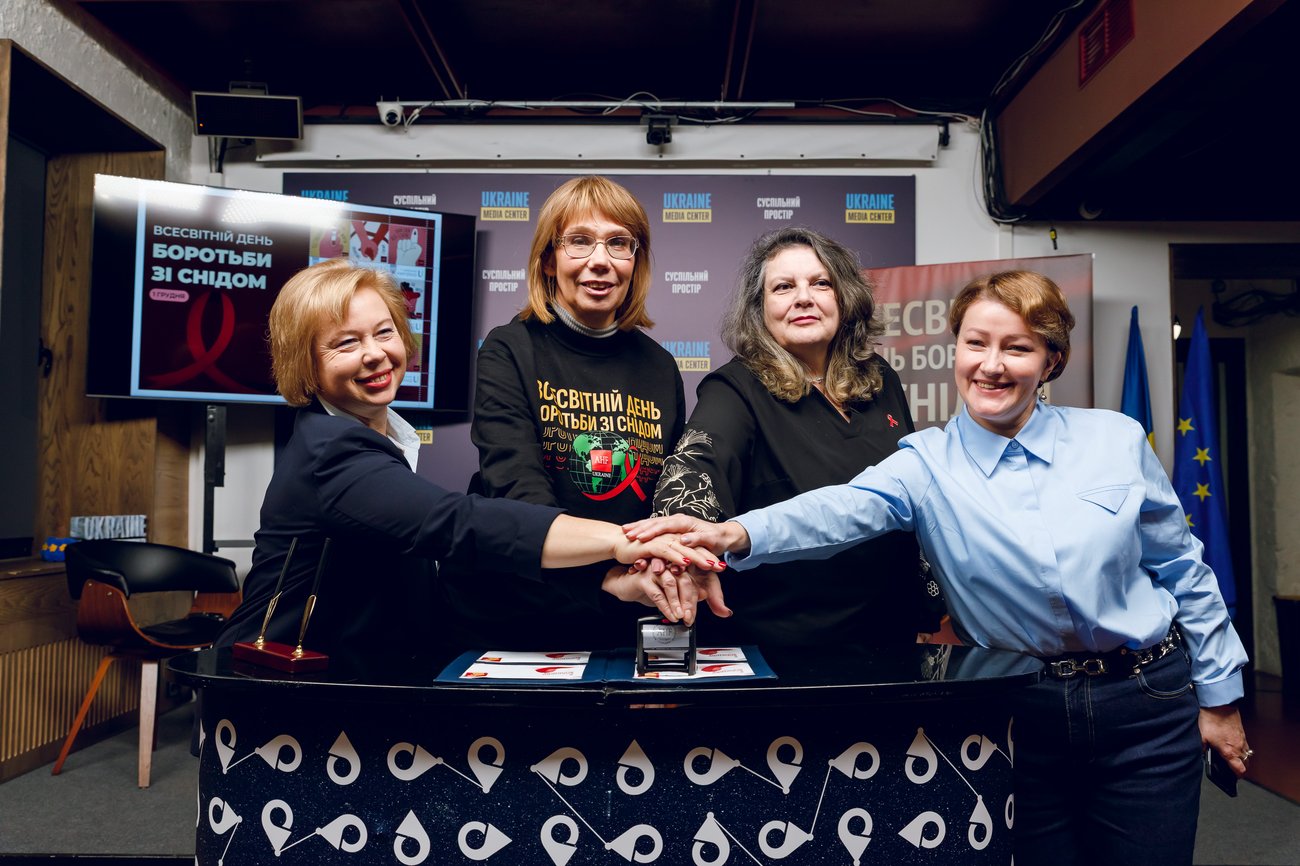
From left to right: Larysa Hetman (Public Health Center of Ukraine), Yaroslava Lopatina (AHF Ukraine Country Program Director), Gabriela Ionascu (UNAIDS Country Director), and Olena Pavlyshyn (Center for Integrated Medical and Social Services). |
|
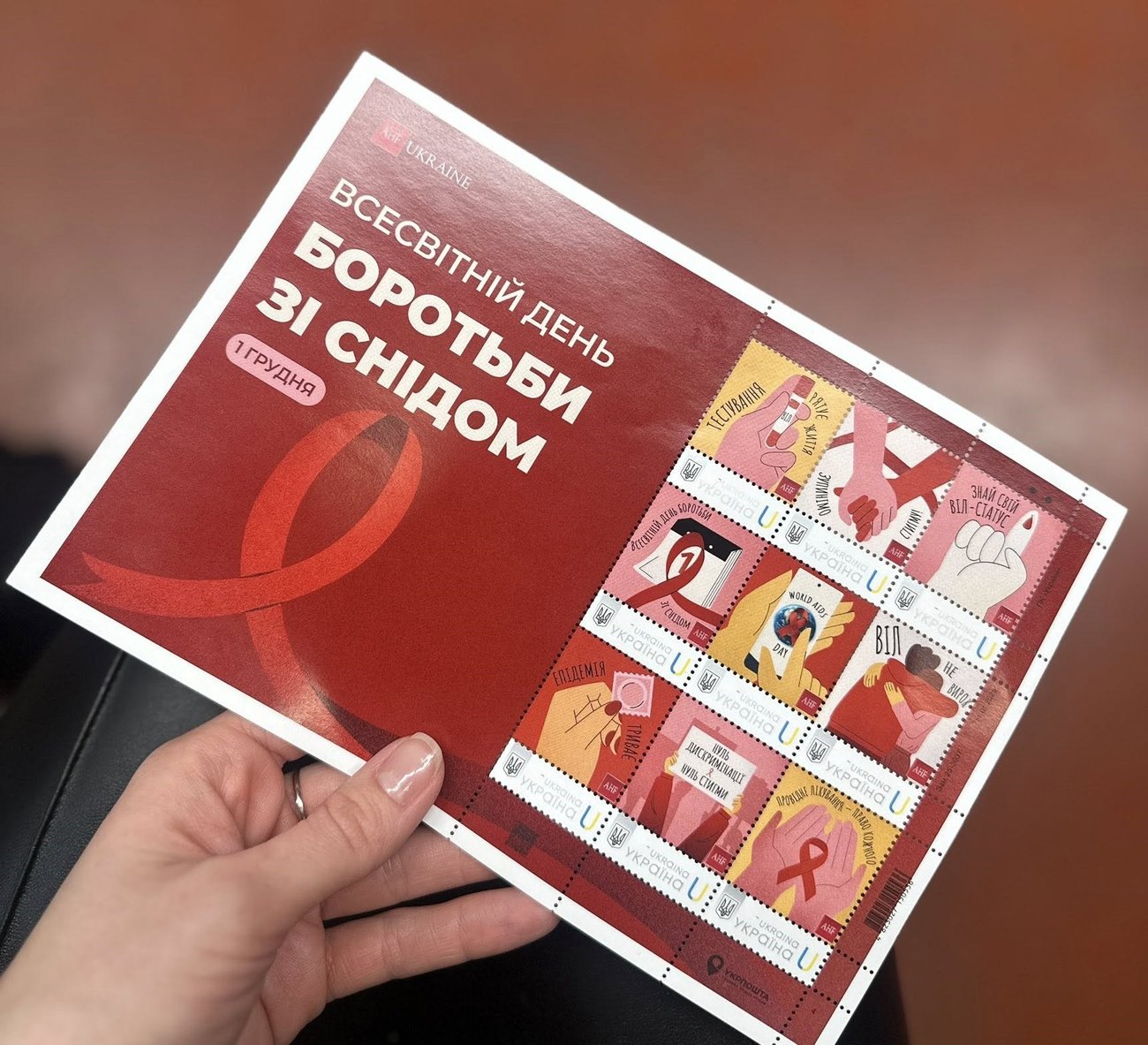
On World AIDS Day, commemorated annually on Dec. 1, AHF Ukraine and Ukrposhta, the Ukrainian Postal Service, turned a postage stamp into a national statement of resilience. Their special-edition stamp, printed in just 250 sets, carries a message that HIV testing, prevention, and treatment save lives.
The release was unveiled at a press briefing at Media Center Ukraine, where government leaders, international partners, and civil society gathered for the official presentation commemorating its launch. With more than 6,700 HIV infections reported in just the first ten months of 2025, according to the Ukrainian Public Health Centre, AHF Ukraine remains committed to leading a coordinated response that strengthens prevention, expands care, and keeps the epidemic in public view. |
|
|
 |
|
AHF Ukraine's nine limited edition World AIDS Day stamps. |
|
|
"In 2011, Ukrposhta issued a stamp titled ‘AIDS: 30 Years’ to draw public attention to an issue that affects millions of people: the fight against HIV/AIDS. Usually, Ukrposhta does not revisit topics that have already been covered on postage stamps, but today, in the context of full-scale war, this topic takes on special significance," said Nataliia Mukhina, Head of the Stamped and Philatelic Products Department at JSC Ukrposhta.
"War increases vulnerability and risks, complicates access to medical care, and diverts resources that were previously allocated for prevention and treatment. That is why this new postage stamp issue is so important." |
|
|
|
|
AHF Ukraine began providing HIV prevention, testing, and treatment services in 2009. Today they serve more than 94,000 clients. |
 |
|
Thato Tsotako: Empowered to Lead |
|
LESOTHO |
|
Thato Tsotako is the President of the Girls Act Maseru Chapter in Lesotho. Her story is next in our "I Am AHF" series featuring remarkable staff, clients, and partners who are doing what's right to save lives everyday. |
|
|
 |
|
"Your voice matters. Be bold, stay informed, and never let anyone limit your dreams just because you're a girl," said Thato. |
|
|
I was just a small girl from Ha Thetsane, dealing with body shaming and facing abuse. Life wasn’t easy. I battled depression alone, lived with suicidal thoughts, and faced more than most people could imagine. But those challenges shaped who I am today. Without them, I wouldn’t be this woman. I was once a shy, broken girl; now I am a grown, confident woman collecting awards. A leader. Outspoken. An advocate.
I first heard about AHF’s Girls Act program through Sebabatso Lentsoenyane, AHF Lesotho’s Girls Act coordinator. As soon as she told me about it, I felt drawn in. I told myself, this is my chance to use Girls Act to change other girls’ lives.
Girls Act opened my eyes to the realities of HIV and STIs. It showed me how silence and stigma make things worse and taught me to use my voice to educate others. The program helped me build self-esteem, speak confidently in public, and lead peer education sessions. I learned that leadership begins with courage. Today, I serve as President of the Girls Act Maseru Chapter. |
|
|
|
|
|
|
Regional Investment in Health is Key for Sustainable Development |
|
The following opinion piece by AHF President Michael Weinstein and former Tunisian Prime Minister Mehdi Jomaa highlights why strong regional health systems are essential for resilient, equitable healthcare. Published by global news platform Health Policy Watch. |
 |
|
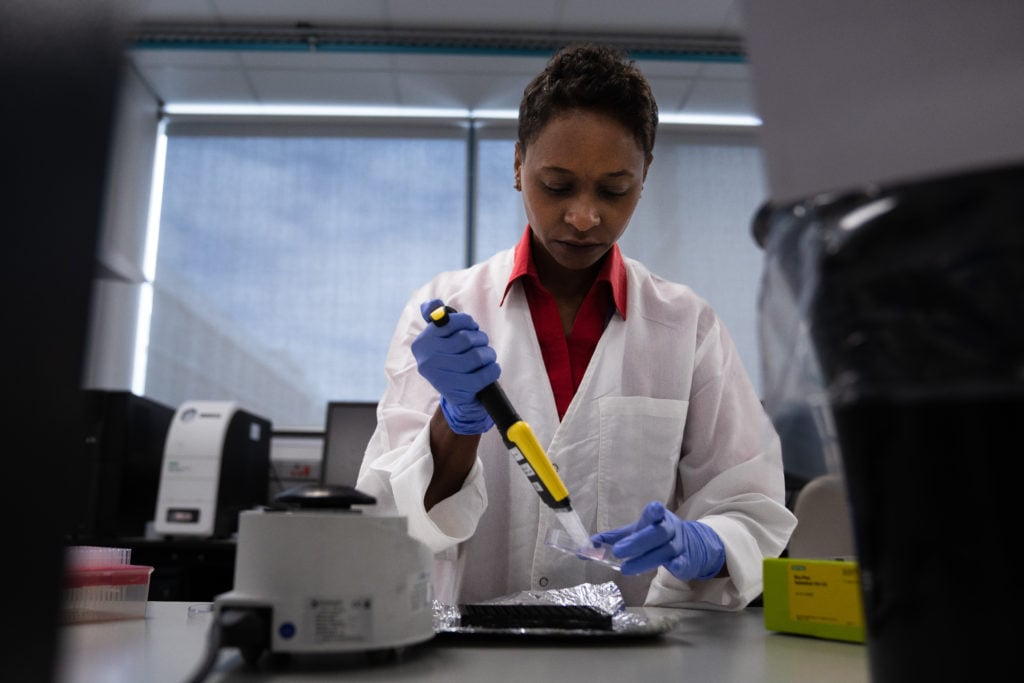
A technician at the Biomedical Research Institute in South Africa. Photo and caption: Health Policy Watch. |
|
As the world navigates a pivotal moment in global health and development, one of the most critical pathways to sustainable development is through regional public health. Investing in regional health systems and production capacity of public health goods isn’t just a moral responsibility; it is an economic imperative.
A 2020 McKinsey & Company report revealed that every $1 spent on health in developing countries can yield a return of $2 to $4, underlining the impact of strategic investments in health.
When the COVID-19 pandemic brought the world to a standstill, it not only revealed critical failures and fragilities in the global response to public health crises but also highlighted the inextricable link between health and development.
It caused the first rise in global poverty in a generation, triggered the deepest global recession since the end of World War II, and widened inequalities within and across countries, particularly for the most vulnerable. |
| Read More |
|
|
|
|
|
|
CHECK OUT THE LATEST FROM US ON INSTAGRAM |
 |
|
Click on the post to see more! |
|
|
 |
|
|
|
Click to follow us on social media. |
|
|
|
|